

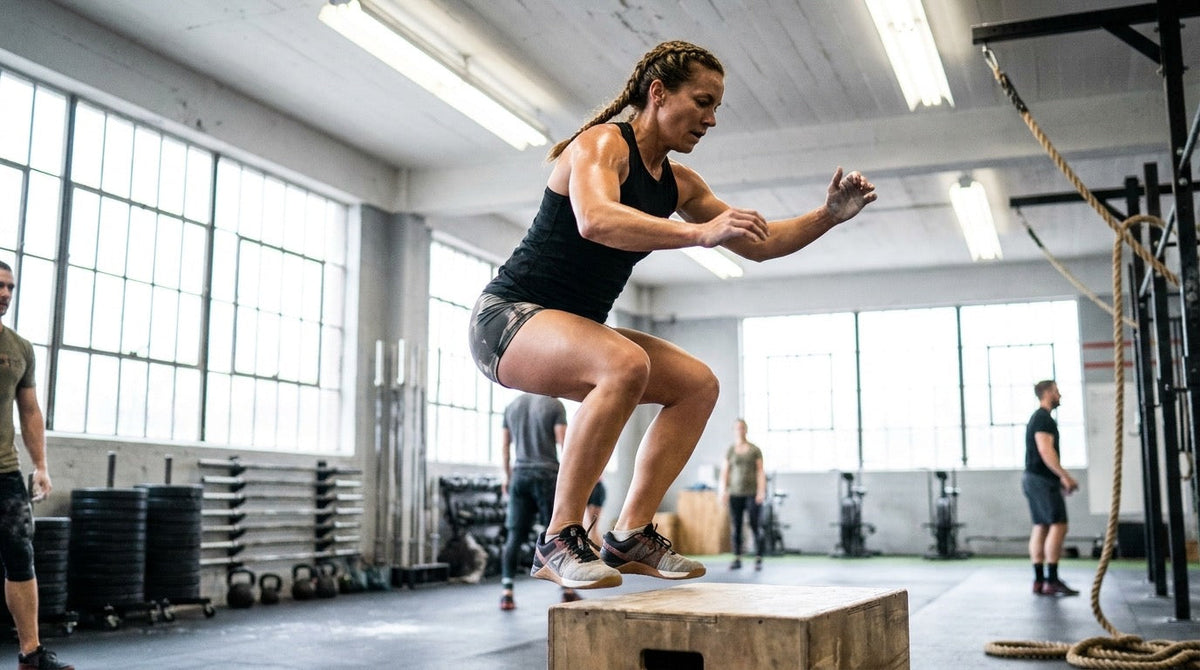
You train hard. You show up early, push through the burn, and never let discomfort stop you. But there's one thing quietly sidelining more athletes than any torn muscle or stress fracture — and almost nobody talks about it. Leaking urine during exercise is so common among active women that researchers estimate up to 80% of high-impact female athletes experience it at some point, according to studies published in the International Journal of Sports Medicine and cited by the National Institutes of Health (NIH). If you've ever crossed your legs mid-jump, avoided trampolines, or quietly changed your shorts after a tough run, you are not alone — and you are absolutely not broken. This guide is for every woman who refuses to quit, but wants real answers about exercise incontinence.
Why Athletes Leak: The Science Behind Exercise Incontinence in Women
Stress urinary incontinence (SUI) — the technical name for leaking during physical activity — happens when the pressure inside your abdomen spikes faster than your pelvic floor muscles can respond. A heavy landing, a box jump, a sprint finish, a hearty laugh mid-burpee: all of these create a sudden increase in intra-abdominal pressure. When the pelvic floor isn't strong enough, fast enough, or coordinated enough to counter that pressure, urine escapes.
Here's the thing most people miss: this is not just a problem for women who have had children or who are postmenopausal. Research shows that elite nulliparous (never-been-pregnant) athletes — gymnasts, runners, volleyball players, CrossFit competitors — report some of the highest rates of exercise-related leaking. A landmark study found that 28–80% of women in high-impact sports experience urinary incontinence during training, with rates varying by sport intensity and impact level. The American Urological Association (AUA) confirms that repetitive high-impact loading is a significant contributing factor.

Contributing factors specific to active women include:
- Repetitive impact loading — running, jumping, and landing repeatedly fatigues pelvic floor muscles over time
- Chronic breath-holding or Valsalva maneuver — common during heavy lifting, which spikes intra-abdominal pressure dramatically
- Low estrogen states — common in female athletes with high training volumes, especially those with irregular periods (Relative Energy Deficiency in Sport, RED-S)
- Previous pregnancy or birth injury — even if recovery seemed complete
- Core dysfunction — the pelvic floor is part of your "core canister" and when the system is uncoordinated, leaks happen
The National Association for Continence (NAFC) notes that many women wait six or more years before discussing leaking with a healthcare provider. Six years of modifying workouts, avoiding sports, and managing alone. That ends today.
The Pre-Contraction Technique: Your First Line of Defense
If there is one skill every active woman should learn immediately, it is this: the pre-contraction technique, sometimes called the "Knack" maneuver.
Research published in the journal Obstetrics & Gynecology and referenced by the Mayo Clinic demonstrated that women who consciously contracted their pelvic floor muscles just before a cough, sneeze, or moment of exertion reduced leakage by up to 98% within just one week of practice. The principle applies directly to athletic movement.
How to Practice the Pre-Contraction Technique
- Find your pelvic floor first. Sit or lie comfortably. Imagine you are trying to stop the flow of urine or prevent passing gas. That lifting, squeezing sensation is your pelvic floor engaging. Hold for three seconds, release fully, and repeat ten times. Do this daily until the sensation is clear.
- Practice the timing. Before you cough or sneeze in daily life, squeeze first. This trains the neurological pathway so the contraction becomes faster and more automatic.
- Apply it to exercise. Before you land from a box jump, exhale and squeeze. Before the foot strike on a downhill run, engage first. Before the bottom of a squat with heavy load, brace your entire core — not just your abs — and include the pelvic floor in that brace.
- Don't hold your breath. Breath-holding during lifting massively increases pressure downward. Practice exhaling on exertion (exhale as you press, pull, or jump) while maintaining a gentle pelvic floor lift.
This technique does not replace pelvic floor physical therapy — it is a bridge that gives you immediate, practical control while you build long-term strength.

Sport-by-Sport Modifications That Actually Work
You should not have to stop doing the sports you love. But smart modifications can dramatically reduce leaking while you build pelvic floor capacity. Here's how to adapt by activity:
Running
- Shorten your stride slightly and increase cadence — this reduces impact force per step
- Run on softer surfaces (grass, trails) when possible to reduce ground reaction force
- Avoid running on a full bladder — void 15–20 minutes before your run, not immediately before (an overly empty bladder can increase urgency)
- Consider run/walk intervals to give your pelvic floor recovery time between impact bursts
High-Impact and CrossFit Training
- During the acute phase, substitute double-unders for single-unders, reduce box jump height, or swap box jumps for step-ups
- For heavy lifts: focus on exhale on exertion, reduce load temporarily if you are leaking consistently at current weights
- Avoid "grinding" through reps with full breath-holding — break sets into smaller chunks with breath resets
Gymnastics and Dance
- Work with a pelvic floor PT to evaluate landing mechanics — anterior pelvic tilt and poor hip hinging increase pelvic floor strain
- Strengthen your hip external rotators and glutes to better support the pelvis during high-impact moves
Swimming and Cycling
- Good news — these are low-impact and typically much easier on the pelvic floor. Use them as "active recovery" options while you rehabilitate
- For cycling, ensure your seat height and posture are correct to avoid pelvic floor compression
A Progressive Return-to-Sport Framework for Pelvic Floor Recovery
Think of pelvic floor rehabilitation the same way you think of returning from any other injury. You wouldn't go from a torn ACL to a marathon. The same graduated loading principle applies here.
Phase 1: Foundation (Weeks 1–4)
Focus entirely on pelvic floor awareness, activation, and basic strength. Work with a pelvic floor physical therapist — this is the gold standard recommendation from both the AUA and the Mayo Clinic. Basic Kegel exercises, diaphragmatic breathing, and coordination between the breath and pelvic floor are the priority. Avoid high-impact activity if leaking is severe.
Phase 2: Loading (Weeks 4–8)
Introduce low-impact exercise: walking, swimming, cycling, bodyweight strength work. Begin applying the pre-contraction technique to all exercise. Practice single-leg balance, hip hinging, and squat patterns with perfect breath and bracing mechanics. Introduce light running intervals if leaking has reduced significantly.
Phase 3: Progressive Impact (Weeks 8–12+)
Gradually reintroduce running distances, jump training, and heavy lifting — one variable at a time. The rule: if you are leaking more than a few drops occasionally, you have progressed too quickly. Step back one phase. This is not failure; this is intelligent training.
Phase 4: Performance
Return to full sport with maintenance pelvic floor work integrated into your training program. Many athletes include pelvic floor exercises as a permanent part of their warm-up and cooldown.
Daily Management: Practical Tools for Active Women
Managing exercise incontinence day-to-day is about more than exercises. Here are practical, non-negotiable strategies for active women:
What You Wear Matters
Standard disposable pads shift, bunch, and were never designed for the dynamic movement of athletic training. For active women managing leaks during workouts, purpose-built protection is worth every penny. Orykas washable incontinence underwear is designed with moisture-wicking, odor-neutralizing technology and a secure fit that moves with your body — not against it. Having reliable protection means you can focus on your workout, not on whether you need to check yourself between sets. Orykas underwear is reusable and built for real athletic life, which makes it both a practical and sustainable choice for long-term management.
Hydration Strategy
Do not restrict fluids to prevent leaking. The CDC and bladder health specialists both caution that dehydration concentrates urine, irritates the bladder lining, and can actually worsen urgency over time. Drink consistently throughout the day, reduce caffeine and alcohol (both bladder irritants), and hydrate well before and after — not just in a rush before training.
Bladder Irritant Awareness
Common irritants that can worsen leaking include: caffeine, alcohol, carbonated drinks, artificial sweeteners, spicy foods, and citrus. You don't have to eliminate them all — but if you're struggling significantly, a two-week elimination trial can reveal which ones are most problematic for your body.
Bladder Training
If urgency (sudden, strong urge to go) is part of your picture, bladder training helps. The goal is to gradually extend the time between bathroom visits, teaching your bladder to hold more and your brain to ignore false urgency signals. Work with your pelvic floor PT or urologist for a structured plan.

When to See a Professional
Pelvic floor physical therapy is first-line treatment for stress urinary incontinence — not a last resort. The NAFC and the AUA both recommend it as the initial intervention before medication or surgical options are considered. Look for a physical therapist who is certified in pelvic floor rehabilitation (often listed as PRPC, WCS, or similar credentials).
See a healthcare provider sooner rather than later if:
- Leaking is affecting your training volume or sport participation
- You are also experiencing pelvic pain, heaviness, or pressure (possible pelvic organ prolapse)
- Symptoms appeared or worsened postpartum
- Conservative management isn't improving things after 8–12 weeks
Other treatment options your provider may discuss include pessaries, estrogen therapy (for those in perimenopause or menopause), biofeedback, electrical stimulation, and in more complex cases, surgical procedures. But for most athletic women, pelvic floor PT plus smart training modifications will make a dramatic difference.
Key Takeaways
- Exercise incontinence affects up to 80% of women in high-impact sports — it is a performance issue, not a hygiene issue or sign of weakness
- The pre-contraction (Knack) technique gives immediate, evidence-based control during workouts
- Smart sport modifications reduce leaking without requiring you to stop training
- A progressive return-to-sport framework — just like any other injury rehab — is the path to long-term resolution
- Pelvic floor physical therapy is first-line treatment and highly effective
- Reliable protection like Orykas washable incontinence underwear keeps you active and confident while you do the work
- You do not have to choose between athletics and continence — you adapt, you train smarter, and you keep going
Frequently Asked Questions
Is it normal to leak urine during exercise?
It is extremely common — research shows up to 80% of women in high-impact sports experience it — but it is not something you have to accept as permanent. Stress urinary incontinence during exercise is a treatable condition. Pelvic floor physical therapy, technique modifications, and progressive training adjustments can significantly reduce or eliminate leaking for most active women.
Will doing Kegel exercises fix exercise incontinence?
Kegel exercises are a helpful starting point, but they are only one piece of the puzzle. Many women with exercise incontinence have pelvic floors that are too tight (not too weak), poorly coordinated, or unable to respond quickly enough to sudden pressure changes. A pelvic floor physical therapist can assess exactly what your pelvic floor needs — which may include relaxation, coordination training, and functional strength work alongside basic Kegels.
Should I stop running or doing high-impact exercise if I leak?
Not necessarily. The goal is smart adaptation, not cessation. During the rehabilitation phase, you may temporarily reduce intensity, swap some exercises for lower-impact alternatives, or shorten your sessions. The pre-contraction technique and proper breathing mechanics can reduce leaking significantly while you build pelvic floor capacity. Work with a pelvic floor PT to determine the right level of modification for your specific situation.
What type of underwear or protection is best for exercising with incontinence?
Standard disposable menstrual pads are not designed for the movement demands of exercise — they shift, bunch, and often fail. Purpose-built incontinence protection that offers a secure, athletic fit is a much better choice. Washable options like Orykas incontinence underwear are designed for active use, offer real absorbency without bulk, and are reusable — making them both effective and sustainable for long-term management during your recovery journey.
Can exercise incontinence get worse over time if I ignore it?
Yes. Ignoring the underlying pelvic floor dysfunction that causes exercise incontinence can allow it to worsen, particularly if you continue high-impact training without addressing the root cause. Over time, the cumulative loading can further fatigue and weaken pelvic floor structures. The good news: early intervention with pelvic floor PT and training modifications is highly effective. According to the NAFC and NIH, the sooner you address it, the better your outcomes.
Share:
An OB-GYN Answers Your Questions About Pregnancy and Bladder Control
7 Myths About Female Incontinence That Need to Die