

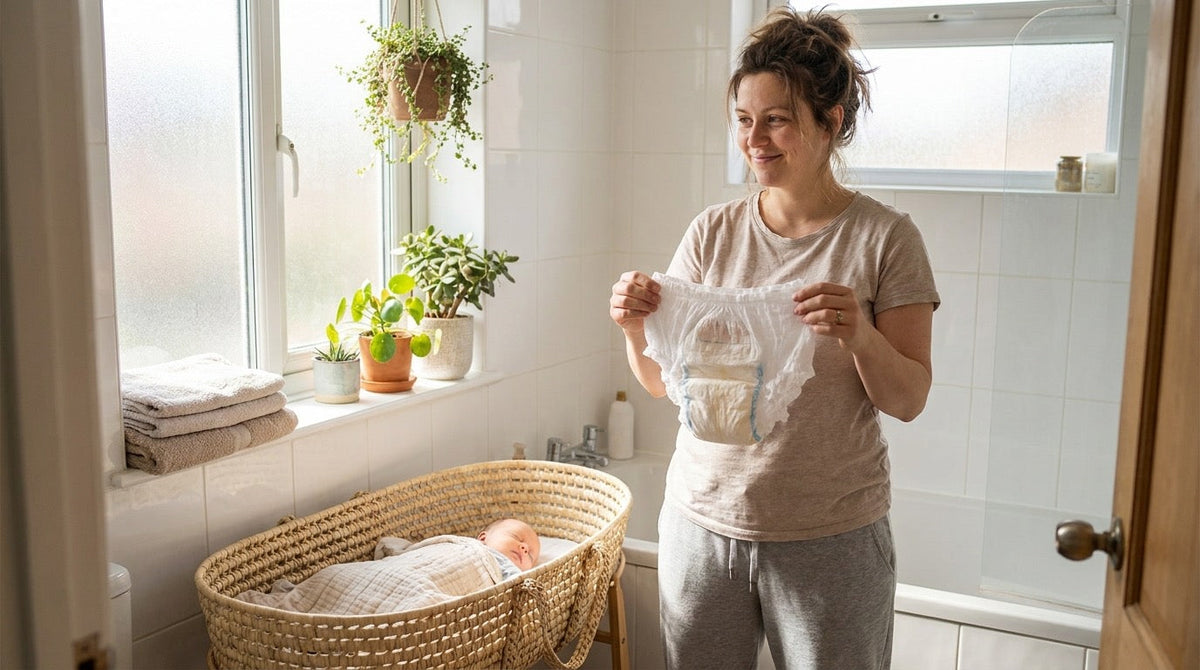
If you've found yourself leaking when you laugh, sneeze, or chase after a toddler in the weeks after giving birth, you're not alone — not even close. According to the American Urogynecologic Society (AUGS), approximately 1 in 3 women experience urinary incontinence after childbirth. That's a staggering number, and yet it remains one of the most underreported, under-discussed realities of postpartum life. This guide is here to change that. We'll walk you through exactly why postpartum incontinence happens, what a realistic recovery timeline looks like, when to seek professional help, and how to manage day-to-day life while your body heals.
What Is Postpartum Incontinence?
Postpartum incontinence is the involuntary leakage of urine (and in some cases, stool) that occurs after childbirth. It typically falls into one of two categories:
- Stress urinary incontinence (SUI): Leakage triggered by physical pressure — sneezing, coughing, laughing, lifting, or exercising.
- Urgency urinary incontinence (UUI): A sudden, intense urge to urinate that's difficult to control, sometimes resulting in leakage before you reach the bathroom.
- Mixed incontinence: A combination of both stress and urgency symptoms, which is common postpartum.
It's also worth noting that some women experience fecal incontinence — difficulty controlling bowel movements — particularly after a vaginal delivery with significant perineal tearing or an episiotomy. This is less commonly discussed but equally valid and treatable.

The National Institute of Diabetes and Digestive and Kidney Diseases (NIDDK), a branch of the NIH, notes that pregnancy and vaginal delivery are among the most significant risk factors for developing urinary incontinence in women. Understanding the why behind it is the first step toward recovery.
Why Does Childbirth Cause Incontinence?
Your pelvic floor is a hammock-like group of muscles, ligaments, and connective tissues that support your bladder, uterus, and rectum. During pregnancy, these structures bear the weight of a growing baby for nine months. During vaginal delivery, they stretch dramatically — sometimes to more than three times their normal length — to allow your baby to pass through the birth canal.
Here's what can happen during that process:
- Muscle overstretching or tearing: The levator ani muscles, which form the core of your pelvic floor, can sustain micro-tears or full avulsions (detachments) during delivery.
- Nerve damage: The pudendal nerve, which controls bladder and bowel function, can be compressed or stretched during labor and delivery.
- Connective tissue trauma: Ligaments and fascia that support the bladder neck may be weakened, reducing urethral closure pressure.
- Hormonal shifts: Postpartum estrogen drops can thin the urethral lining and reduce pelvic tissue tone, especially in breastfeeding mothers.
Even women who deliver via C-section aren't completely protected — the physical stress of pregnancy itself can weaken pelvic floor muscles before a single contraction begins. However, research published in the American Journal of Obstetrics and Gynecology confirms that vaginal delivery, particularly with a long second stage of labor, forceps use, or significant tearing, carries the highest risk of postpartum pelvic floor dysfunction.
Postpartum Incontinence Recovery: A Realistic Timeline
One of the most common questions new mothers ask is: Will this go away on its own? The honest answer is: often yes, but it depends — and you have real agency over how quickly and completely you recover.
Weeks 1–6: The Healing Phase
In the first six weeks postpartum, your body is in active repair mode. Swelling is subsiding, tissue is healing, and your uterus is contracting back to its pre-pregnancy size. Leakage during this period is extremely common and expected. This is not the time to push through intense exercise or ignore symptoms.
What to focus on:
- Gentle diaphragmatic breathing to reconnect with your core and pelvic floor.
- Beginning gentle Kegel exercises once any stitches have started to heal (typically around week 2–3, with provider clearance).
- Managing fluid intake strategically — staying well hydrated while reducing bladder irritants like caffeine and carbonated drinks.
- Using reliable, comfortable protection. Many women find that dedicated washable incontinence underwear — like those from Orykas — offer a more dignified and sustainable alternative to bulky disposable pads during this phase.
Weeks 6–12: Rebuilding Phase
After your six-week postpartum check-up (ideally a comprehensive pelvic floor evaluation rather than just a quick clearance visit), most women can begin a more intentional pelvic floor rehabilitation program. Symptoms often begin to improve meaningfully during this window, especially with consistent exercise.
What to focus on:
- Progressing Kegel exercises: working on both strength (long holds) and coordination (quick flicks).
- Reintroducing low-impact exercise like walking, swimming, or yoga.
- Tracking symptoms — is leakage improving, staying the same, or worsening?
- Seeking a pelvic floor physical therapy referral if you haven't already (more on this below).
Months 3–12: Progressive Recovery
For most women with mild-to-moderate postpartum incontinence, significant improvement — and often full resolution — occurs within the first year. A 2021 systematic review in Neurourology and Urodynamics found that pelvic floor muscle training substantially reduces both the severity and frequency of postpartum urinary incontinence when started early and performed consistently.
However, if you're still experiencing meaningful leakage at the six-month mark, that's a clear signal to escalate care. Persistent symptoms don't mean permanent damage — they mean you need more targeted support.
Beyond 12 Months
Symptoms that continue beyond a year without improvement warrant a formal evaluation by a urogynecologist or urologist. Treatments including advanced pelvic floor therapy, pessaries, bladder training programs, or (in select cases) minimally invasive procedures may be appropriate. The American Urological Association (AUA) offers clear clinical guidelines for stress urinary incontinence that can inform conversations with your provider.

How to Do Kegel Exercises Correctly
Kegels are the most widely recommended first-line treatment for postpartum stress incontinence — but they're frequently performed incorrectly. Bearing down, holding your breath, or squeezing your glutes or thighs doesn't count. Here's the right approach:
- Find the right muscles: Imagine you're stopping the flow of urine midstream (don't actually do this regularly — it's just a mental cue). Those are your pelvic floor muscles.
- Start lying down: Gravity works against you when you're upright and weak. Begin exercises on your back with knees bent.
- Contract and hold: Squeeze the pelvic floor muscles for 5–10 seconds, then fully release for the same count. Relaxation is just as important as contraction.
- Aim for 3 sets of 10 reps: Work up to this gradually if you're sore or fatigued.
- Progress to upright positions: As strength improves, practice Kegels while sitting, standing, and eventually during functional activities like lifting.
- Be consistent: Daily practice over weeks and months produces results. Sporadic effort doesn't.
If Kegels cause pain, worsen symptoms, or you're unsure you're doing them correctly, stop and consult a pelvic floor physical therapist. Some postpartum women actually have hypertonic (too-tight) pelvic floors, for whom strengthening exercises can backfire.
When to See a Pelvic Floor Physical Therapist
Pelvic floor physical therapy (PFPT) is the gold-standard, evidence-backed treatment for postpartum incontinence — and it is dramatically underutilized in the United States compared to countries like France, where postpartum pelvic floor rehab is a standard part of postnatal care covered by national health insurance.
You should seek a PFPT referral if:
- You're still leaking at 6–8 weeks postpartum despite doing Kegel exercises.
- You experience pelvic pain, pressure, or a sensation of heaviness (possible prolapse symptoms).
- You have difficulty controlling bowel movements or passing gas.
- Kegels are painful or seem to make symptoms worse.
- You want professional guidance from the start rather than guessing on your own.
- You're returning to high-impact activities like running and want to do so safely.
Don't wait for your OB to bring it up — proactively request a referral. The National Association for Continence (NAFC) maintains a provider directory that can help you find a specialist in your area.

Daily Management: Living Comfortably While You Recover
Recovery takes time, and in the meantime, you deserve to feel comfortable and confident — not anxious every time you sneeze.
Bladder Habits That Help
- Avoid "just in case" urination: Going to the bathroom before you actually need to can train your bladder to signal urgency at lower volumes. Aim to urinate every 2–4 hours.
- Double voiding: After urinating, wait a moment, then try to urinate again to ensure full bladder emptying.
- Minimize bladder irritants: Coffee, alcohol, artificial sweeteners, citrus, and spicy foods can increase urgency. Reducing these can make a real difference.
- Stay hydrated: Concentrated urine irritates the bladder. Aim for pale yellow urine throughout the day.
Choosing the Right Protection
You don't have to choose between bulky disposable pads and feeling unprepared. Orykas washable incontinence underwear is designed specifically for women managing light-to-moderate leakage — with absorbent, leak-proof layers built into underwear that looks and feels like regular lingerie. They're reusable, sustainable, and far more dignified than traditional incontinence products. Many postpartum women wear them during workouts, at work, or on trips where bathroom access is uncertain.
Core and Body Mechanics
- When lifting (including your baby), exhale and gently engage your pelvic floor before the effort.
- When you feel a sneeze or cough coming, quickly contract your pelvic floor — this is called "the knack technique" and has research backing from the NIH.
- Avoid straining during bowel movements. Use a footstool to elevate your feet and create a more natural squatting angle.
Key Takeaways
- Postpartum incontinence affects approximately 1 in 3 women and is a normal — if underreported — part of recovery.
- It results from the physical stress of pregnancy and delivery on the pelvic floor muscles, nerves, and connective tissue.
- Most women see significant improvement within the first 6–12 months, especially with consistent pelvic floor exercises and proper guidance.
- Pelvic floor physical therapy is the gold-standard treatment — don't wait to be referred; ask for it proactively.
- Symptoms persisting beyond 6–12 months warrant evaluation by a urogynecologist or urologist.
- Daily management strategies — including bladder habits, the knack technique, and reliable protective underwear — can significantly improve quality of life during recovery.
- You are not broken, and you are not alone. With the right support, postpartum incontinence is highly treatable.
Frequently Asked Questions
How long does postpartum incontinence last?
For most women, postpartum urinary incontinence improves significantly within the first three to six months after delivery, particularly with pelvic floor exercises and physical therapy. Many women achieve full resolution within 12 months. However, symptoms that persist beyond six months without improvement are a signal to seek a formal evaluation with a pelvic floor specialist or urogynecologist. Early intervention consistently leads to better outcomes.
Is postpartum incontinence normal after a C-section?
Yes — incontinence can occur after cesarean delivery, though it's statistically less common and often less severe than after vaginal birth. Pregnancy itself places significant strain on the pelvic floor regardless of delivery method. Hormonal changes postpartum, reduced physical activity during C-section recovery, and pre-existing pelvic floor weakness can all contribute to leakage after a cesarean. If you're experiencing symptoms, pelvic floor physical therapy is equally effective regardless of your delivery type.
When should I be worried about postpartum incontinence?
Mild leakage in the first six weeks is expected. You should seek medical evaluation sooner rather than later if: you're experiencing significant leakage that's not improving by 8–12 weeks; you have pelvic pain, pressure, or a bulging sensation (which may indicate pelvic organ prolapse); you're losing control of bowel movements; or you notice blood in your urine. The Mayo Clinic advises that incontinence is always worth discussing with your provider — it's never "just something you have to live with."
Can postpartum incontinence come back with future pregnancies?
Yes. Women who experienced postpartum incontinence with one pregnancy are at higher risk of recurrence with subsequent pregnancies. However, maintaining pelvic floor strength between pregnancies through consistent exercise, a healthy weight, and avoiding chronic straining significantly reduces that risk. Many women who completed pelvic floor PT after their first delivery report milder symptoms — or none at all — after subsequent births.
What's the difference between postpartum incontinence and pelvic organ prolapse?
They are related but distinct conditions. Postpartum incontinence refers specifically to involuntary urine or stool leakage. Pelvic organ prolapse occurs when weakened pelvic floor muscles and ligaments allow the bladder, uterus, or rectum to descend into or beyond the vaginal canal, creating a sensation of pressure, heaviness, or bulging. The two conditions often co-exist, and both are treated by pelvic floor physical therapists and urogynecologists. If you notice any pelvic pressure or bulging alongside leakage, mention both symptoms to your provider.
Share:
Best Leak-Proof Underwear for Women 2026: An Honest Comparison
5 Pelvic Floor Exercises That Actually Work for Bladder Leaks